
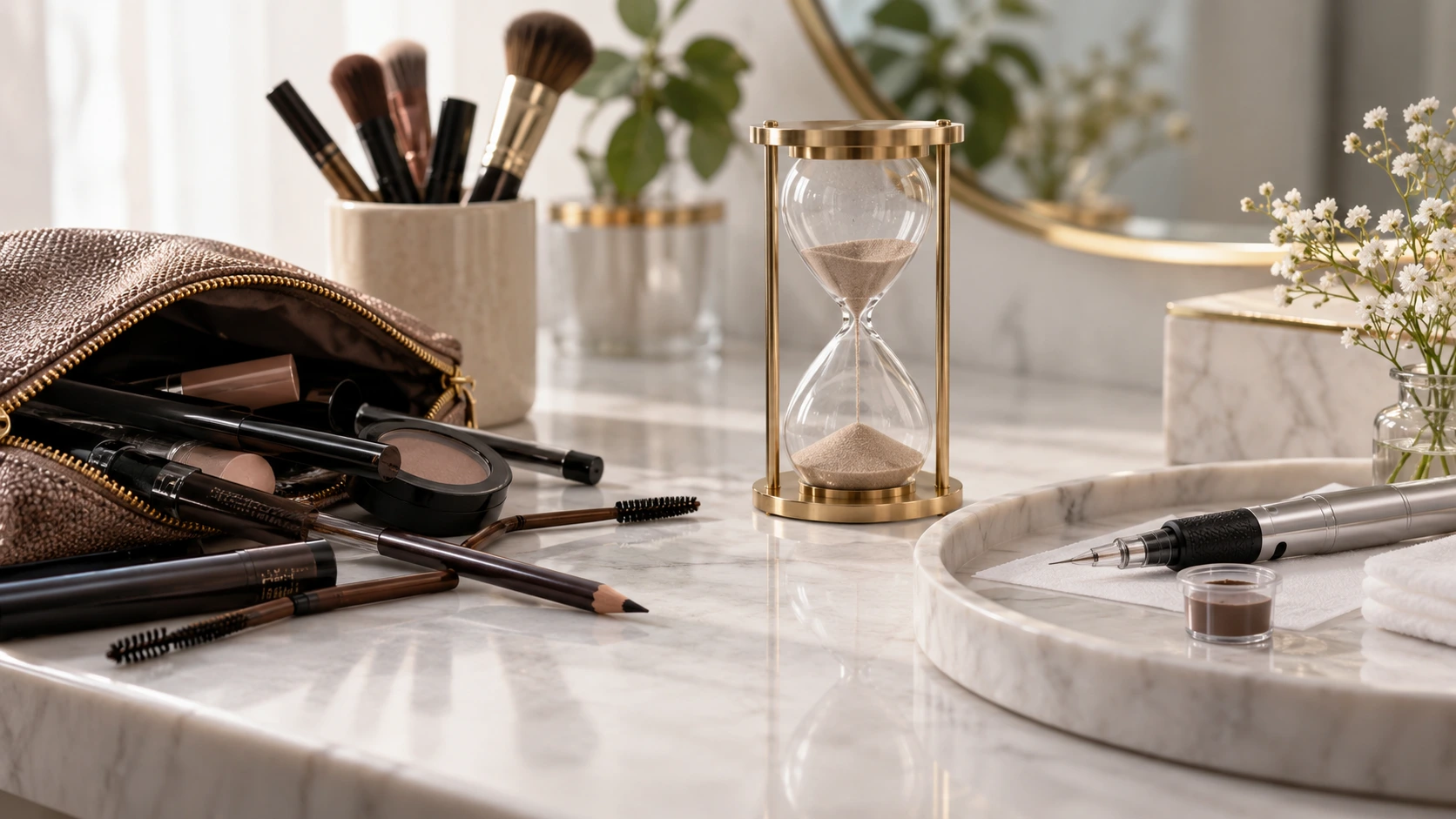
Permanent makeup deposits pigment into the upper layers of the skin, creating results that last roughly 12 to 24 months depending on the technique used and how your skin responds. Unlike anything you apply in the morning and wash off at night, a well-executed procedure becomes part of your face the moment it heals. No touch-ups at 6:45 AM. No smudging by noon. Just your face, done.
Key Takeaways
- Permanent makeup isn’t a premium version of your current routine. It’s a completely different category that requires different evaluation criteria.
- Your skin type shapes long-term results more than your preference for any specific technique.
- Microblading creates fine, hair-like strokes suited to normal-to-dry skin. Microshading and ombre brows deliver a softer finish that holds better on oilier skin.
- Women who experience sensitivities to conventional cosmetics often find permanent makeup is the most workable solution because daily topical contact is removed entirely.
- Choosing a licensed, experienced provider matters more than choosing a technique. A poorly executed procedure is far harder to undo than any design decision made at the consultation.
What Actually Makes Permanent Makeup Different?
Most comparisons treat permanent makeup as an upgraded product. That framing puts you on the wrong path from the start.
A brow pencil is a daily performance. You pick it up, apply it, it holds for a few hours, fades, and tomorrow you start again. Permanent makeup is a procedure that becomes part of your face for a year or more. The question you’re actually answering isn’t “which gives me better brows this morning?” It’s “do I want to stop making this decision every single morning for the next two years?”
That shift changes what matters entirely. With a pencil, product quality and daily technique are the relevant variables. With permanent makeup, what matters is your artist’s skill, your skin type, the technique selected, and how well the design maps to your actual facial structure. Completely different criteria, evaluated in a completely different way.
You can review the full range of available procedures at Million Dollar Brows’s services page before deciding anything.
How Do the Main Brow Options Compare?
Each option is marketed on its best day. What follows is what each one looks like on a Tuesday morning when you’re already behind schedule.
| Approach | Daily Time Cost | Approximate Duration | Works Best For | Real Limitation |
|---|---|---|---|---|
| Brow pencil or powder | 5 to 15 minutes every morning | Hours | Anyone comfortable with a consistent daily routine | Fades and smudges; requires application skill on every single use |
| Brow tinting | None after the appointment | 3 to 6 weeks | Existing fullness that needs definition | Adds no density; can’t reshape sparse brows |
| Brow lamination | None after the appointment | 6 to 8 weeks | Thick or unruly brows that need direction | No benefit for sparse brows; results soften before the next appointment |
| Permanent makeup by an unqualified provider | None after healing, in theory | Unpredictable | Budget-focused decisions | Incorrectly mapped or executed results are difficult to correct and may require removal |
| Microblading, microshading, or ombre brows at Million Dollar Brows | None after healing | 12 to 24 months, depending on technique and skin type | Sparse, uneven, or oily-skin brows, evaluated individually | Requires a healing period; a touch-up after healing is standard and included in the process |
The pattern is consistent. Lower-commitment options cost you time, every single day, compounding invisibly. A well-executed permanent procedure requires one well-planned appointment and then nothing. Fine isn’t the same as effortless, and something as small as a pencil is still running the clock every morning you use it.
Why Your Skin Type Changes the Outcome
This is the variable most comparison guides skip entirely, and it shapes long-term results more than any other single factor.
Microblading uses a manual blade to deposit pigment in fine, hair-like strokes. On normal-to-dry skin, those strokes tend to heal with clear, visible definition. On oily skin, the higher sebum content in the dermis can cause the edges of each pigment stroke to soften as the skin heals. The strokes stay, but their crispness can diminish over time. The result can still look good. It just won’t match the sharp, freshly-applied images that circulate on social media. This isn’t a flaw in the procedure. It’s how skin behaves, which is exactly why a skilled artist doesn’t apply the same technique to every face.
This is the kind of thing that only becomes clear after seeing enough healed results to understand how differently skin responds from one person to the next. It’s also why evaluating what actually determines whether microblading looks realistic starts with skin type before anything else.
At Million Dollar Brows, every appointment starts with a consultation to evaluate skin type alongside facial structure and aesthetic goals. For oilier skin, microshading or a full ombre brow typically delivers more durable results because the stippled pigment pattern doesn’t depend on crisp stroke edges to look right as healing progresses. The technique is chosen to fit what your skin will actually do, not the other way around.
The Allergy and Sensitivity Question
This angle doesn’t get discussed as often as it should.
Some women pursuing permanent makeup aren’t primarily motivated by convenience. They’re motivated by the fact that conventional cosmetics have become genuinely uncomfortable to use. Sensitivities to ingredients found in mascara, brow pencils, or eyeshadow pigments are real, and for women who’ve dealt with itching, redness, or irritation from daily cosmetic use, a morning routine isn’t just time-consuming. It actively causes discomfort.
Because permanent makeup pigment is placed beneath the skin’s surface rather than applied topically each day, daily reintroduction of the triggering product is removed from the equation.
The practical fit of this approach for women managing cosmetic sensitivities is worth exploring in depth before any procedure. If you have a documented sensitivity or allergy history, that’s a conversation for your consultation with Elizabeth, where the specifics of your situation can be evaluated properly. The goal is to confirm the approach is appropriate for you before anything is applied.
If you’re weighing whether permanent makeup is the right fit for your specific circumstances, this guide to whether permanent makeup is right for you covers the full picture, including situations where the case for permanent makeup goes well beyond saving time in the morning.
The Lash Decision Follows the Same Logic
Brows get most of the attention in these conversations, but lashes follow identical reasoning.
Mascara is the daily-performance option: fresh application looks great, smudges by mid-afternoon, comes off at night, and starts again tomorrow. Lash extensions add significant fullness with no daily effort, but they need fill appointments every few weeks and careful handling to avoid early shedding. A lash lift with tint sits between the two. It’s a semi-permanent curl that lasts roughly six to eight weeks with no fills, no adhesive, and no mascara required on most days.
For women with sensitivities to mascara formulas or lash extension adhesives, a lash lift with tint removes the daily contact entirely. If you’re trying to figure out which option actually fits your schedule and eye type, the lash lift vs. extensions vs. mascara breakdown is worth reading before booking anything.
What Permanent Makeup Won’t Do
The most confident pitch is usually the least trustworthy signal. So here’s what permanent makeup genuinely doesn’t deliver.
It won’t replace a skilled daily routine if you genuinely enjoy that process. If applying your makeup is something you look forward to, permanent makeup removes part of it. It’s built for people who want that time back, not for people who find the routine satisfying.
It won’t fix poor design. The most common reason microblading looks unnatural isn’t the pigment or the instrument. It’s that the brow shape wasn’t mapped to the client’s actual facial structure. A stencil applies the same shape to every face it touches, and only some of those faces will look right.
Elizabeth hand-maps every design to each client’s individual features because the same shape on two different faces produces entirely different outcomes. One can be exactly right, and one can be obviously off. That’s not recoverable at the touch-up.
Results aren’t permanent in an absolute sense. Pigment fades over 12 to 24 months, which is actually useful because it means your look can be updated as your preferences or features change. A touch-up after the initial healing period is standard and included. Most clients return for a color refresh on their own schedule after that.
If you’re pregnant, managing certain active medical treatments, or dealing with a skin condition in the treatment area, those are timing considerations worth raising in your consultation. They’re not permanent barriers. They’re factors that determine when the procedure is right, not whether it can ever happen. The guide to timing semi-permanent makeup decisions is a useful reference for working through exactly that question.
The Time Math Nobody Totals
Consider a typical situation: ten minutes every morning spent on brow pencil and liner. That feels reasonable on any given day. Over eighteen months, ten minutes daily totals roughly 90 hours on two features of your face. Nobody runs that number in the drugstore aisle.
Permanent makeup has a real upfront investment. The ongoing time cost after healing is effectively zero for the duration of the results. The daily routine has a low upfront cost and a compounding time cost that nobody ever sees itemized. The expensive option isn’t the procedure. It’s the one you pay for every single morning without ever seeing the final total.
FAQ
How long do results actually last?
Microblading typically holds for 12 to 18 months before a color refresh becomes useful, with variation based on skin type, sun exposure, and how closely aftercare instructions are followed. Microshading and ombre brows fall in a similar to slightly longer range. Keeping the treated area protected from prolonged sun exposure extends how long results stay vibrant.
Is the procedure uncomfortable, and what does recovery look like?
Most clients describe the sensation as light scratching after a topical numbing agent is applied. Brows appear darker and more defined in the first week, then soften noticeably as the skin heals. Full settled results are visible after four to six weeks. A touch-up appointment is included to refine the final color and shape once healing is complete.
How do I know whether microblading or microshading is right for me?
Microblading creates individual hair-like strokes for a defined, natural appearance. Microshading deposits pigment in a stippled pattern for a softer, filled finish. The right choice depends primarily on your skin type and the aesthetic you want. Oily skin generally holds microshading better over time. Normal-to-dry skin suits either technique. Elizabeth evaluates this at the consultation, before any design decisions are finalized.
Can I get permanent makeup if I react to conventional cosmetics?
Sensitivity to traditional cosmetics is one reason many women explore permanent makeup. Because pigment sits beneath the skin’s surface rather than being applied topically each morning, it works differently from a product you’re reintroducing to your skin every day. A thorough consultation is the right place to discuss your specific sensitivities and confirm that the procedure is appropriate for your situation.
What should I look for in a provider?
Licensing is the baseline. In New Hampshire, the requirement includes 1,500 completed hours of apprenticeship before practicing. Elizabeth has met that requirement, has performed over 1,000 procedures, and has been working in the beauty industry for over ten years. Beyond licensing, look for a provider who evaluates your skin type, hand-maps the design to your specific facial structure rather than applying a stencil, and includes a follow-up touch-up after healing. A portfolio of healed results tells you far more than fresh before-and-after photos taken on the day of the procedure.
Will permanent eyeliner or lip blushing look natural?
When applied correctly, permanent eyeliner enhances the lash line without looking drawn-on. Lip blushing adds definition and a wash of color that reads as your lips’ natural tone, just more even and consistent. The goal at Million Dollar Brows is always the most natural-looking result, calibrated to your specific coloring and facial structure rather than a standard template. You can explore the full range of available services at the services page to get a sense of what a personalized approach to permanent cosmetics actually involves.
What happens if I’m not fully satisfied with the results after healing?
Pigment fades over time, which means results that aren’t quite right aren’t locked in permanently. Color and shape can be refined at the included touch-up appointment, scheduled specifically for that purpose after the initial healing period. For more significant adjustments, separate correction options exist. The best protection against an outcome you don’t love is a thorough consultation before anything is applied. That’s where design decisions are made and agreed upon, and it’s where good outcomes are set up rather than rescued afterward.
Elizabeth is the founder of Million Dollar Brows, a licensed and certified permanent makeup artist in the state of New Hampshire with over ten years in the beauty industry and 1,500 completed apprenticeship hours. Million Dollar Brows is located at 87 Lafayette Road, Unit 9, Hampton Falls, NH 03844, and serves clients across New Hampshire, Maine, Massachusetts, Connecticut, New York, and Rhode Island. The clinic is open Monday through Saturday, 9 AM to 4 PM. Booking is available online or by phone.