
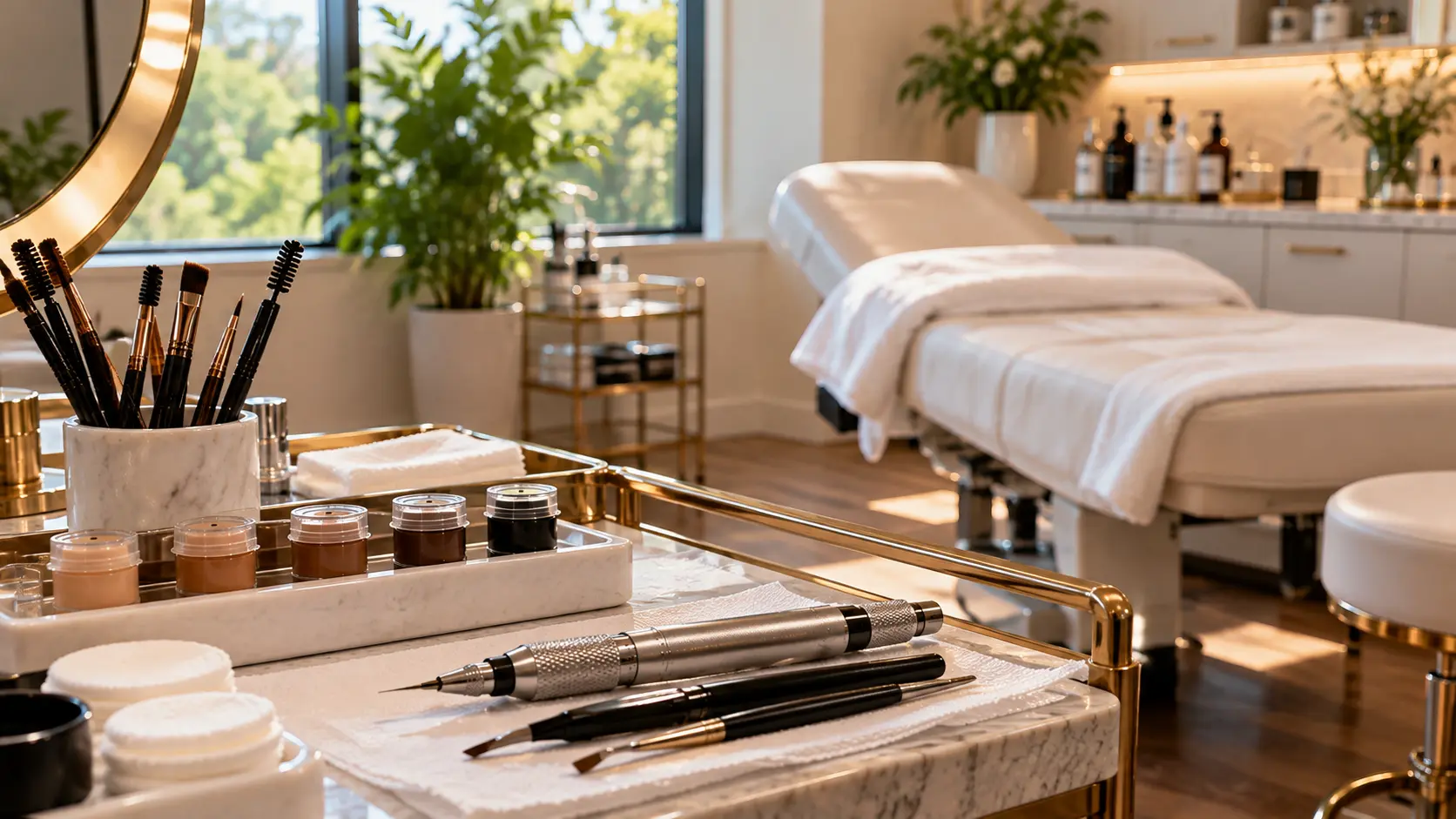
Microblading in New Hampshire creates semi-permanent, hair-stroke brows without the daily routine. A hand-held tool deposits pigment in fine, realistic strokes that mimic natural brow hairs, with results that typically last 12 to 18 months depending on your skin type. The right technique depends on more than the procedure itself. Skin type, facial structure, and your actual lifestyle all shape what works.
Key Takeaways
- Microblading uses fine, hair-like strokes to create defined brows that last roughly 12 to 18 months before a touch-up is needed
- Skin type is the deciding factor in technique selection: oily and combination skin generally holds ombré powder brows better than individual microblading strokes
- Brow lamination and tinting are lower-commitment options, but they require repeat maintenance and can’t add pigment to genuinely sparse areas
- The right technique gets chosen during a proper consultation that includes skin assessment, not from a photo on social media
- Elizabeth freehand maps every design to your actual facial structure without using stencils, which directly determines how natural the result looks on your face
Why Does Your Brow Routine Keep Letting You Down?
The problem isn’t the product you’re using. It’s what you’re asking it to do every single morning.
Daily brow application is a precision task performed under time pressure, with different lighting, different energy, and different hands depending on the day. When you’re running late, strokes come out uneven. When you’re traveling, the right pencil is in a different bag. When a wet fall morning turns into a humid afternoon, the whole thing has softened by lunch.
You’re asking a manual, daily process to produce a consistent result in genuinely inconsistent conditions. That’s not a product failure. It’s a mismatch between the tool and the actual need.
Permanent makeup at Million Dollar Brows exists to close exactly that gap. But which technique fits your face and your skin is a separate question, and it’s worth answering correctly before you book anything.
What Is Microblading, Exactly?
Microblading is a form of semi-permanent makeup where a hand-held tool deposits pigment into the upper layers of the skin in fine strokes designed to look like real brow hairs. The result is a defined, filled brow that reads as natural rather than drawn on.
It isn’t a traditional tattoo. The pigment sits shallower than body ink, which is why it fades over time and why precise color-matching to your natural hair is achievable.
The honest timeline: most people see results lasting 12 to 18 months, with skin that runs oily landing toward the shorter end of that range. A touch-up appointment after initial healing refines the result and extends longevity. At Million Dollar Brows, that follow-up is built into the process from the beginning. It’s not an add-on charge dropped in later. It’s how the technique is supposed to work.
Why Do Brow Results Vary So Much Between People?
Here’s what most brow service marketing skips entirely: technique selection matters less than skin assessment.
The same microblading strokes that stay crisp and defined on dry skin can blur and spread on oily skin within a few months. This isn’t a practitioner error. It’s biology. Oil breaks down pigment retention faster and causes individual strokes to lose their edges before the expected fade window. The strokes don’t disappear cleanly. They soften unevenly, and that uneven softening can look noticeably worse than a clean, uniform fade.
This is why every appointment at Million Dollar Brows starts with a consultation that evaluates skin type before any technique is chosen. Elizabeth has attended training workshops and conferences across New Hampshire, Maine, Massachusetts, Connecticut, New York, Florida, and California. That range isn’t about collecting credentials. Different skin types in different climates behave differently, and a practitioner who has only ever worked in one region has a narrower frame of reference for what happens when New England humidity shifts seasonally or when dry winter air changes how healing progresses.
The technique should follow the skin, not the trend. If a practitioner recommends microblading without asking about your skin type, that consultation isn’t thorough enough.
For a deeper look at this specific comparison, the ombré powder brows vs. microblading breakdown covers exactly what determines which approach holds on your skin.
How the Main Options Actually Compare
The question worth asking isn’t which option photographs best. It’s which one will still be working for you at 6 a.m. on a Tuesday when you have twelve minutes before you need to leave.
| Your Current Situation | What You’re Dealing With | What Microblading with Million Dollar Brows Delivers |
|---|---|---|
| Daily pencil or powder | Precision work every single morning, inconsistent results under time pressure | One consultation, one procedure, mornings back |
| At-home brow kits | Low upfront cost, no skin assessment, inconsistent outcomes | Technique matched to your actual skin type and facial structure |
| Brow lamination or tinting | Repeat appointments every four to eight weeks, no pigment added to sparse areas | Lasting shape and color without recurring maintenance cycles |
| Unverified or undertrained provider | Lower price, higher risk of strokes that blur, migrate, or look obviously placed | Over 1,000 procedures, 1,500 hours of apprenticeship, freehand mapping to your face |
| Waiting and doing nothing | Another year of the same morning routine | A real change to how much time your face takes each day |
The honest tradeoff guide for permanent makeup covers the full picture if you want to see how these options stack up across more scenarios.
What Does the Process Look Like, Start to Finish?
Once you’ve decided microblading is worth exploring, the actual sequence matters.
First, the consultation. This covers your facial features, skin type, existing brow shape and growth pattern, lifestyle, and what you’re actually trying to achieve. Technique gets selected here, not assumed before you walk in.
Second, brow mapping. Elizabeth freehand maps the shape to your natural facial structure. No stencils are used at any point. Every design starts from your own bone structure and existing hair pattern.
Third, the procedure itself, with a topical numbing agent applied beforehand to reduce discomfort.
Fourth, detailed aftercare guidance specific to your skin type and the technique used.
Fifth, a touch-up appointment after healing to refine the finished result. The first several weeks involve pigment darkening and then lightening as the skin heals, and the final look isn’t visible until around four to six weeks out. That’s exactly when the follow-up is scheduled.
The freehand mapping step deserves more attention than it usually gets. Stencils create symmetrical shapes designed for a generalized face. Your face has its own proportions, its own bone structure, and its own brow growth pattern that no stencil accounts for. The reason microblading sometimes looks obviously “done” on someone is that the shape was designed for a template face rather than the actual person in the chair.
Consider a typical situation: someone arrives with brows that have been overplucked over many years, with uneven growth and combination skin. A stencil would impose a uniform shape that sits oddly against her existing features. A freehand approach starts from what’s actually there and fills in what’s genuinely missing. The gap between those two approaches becomes apparent in the design phase, before any pigment is placed.
Elizabeth has performed over 1,000 procedures and completed the 1,500 hours of apprenticeship required by New Hampshire, and freehand mapping is the core of why results look natural rather than placed.
Who Should Think Carefully Before Choosing Microblading?
Microblading isn’t the right technique for every person. Saying so clearly is more useful than overselling it.
If your skin runs significantly oily, microshading or ombré powder brows will hold longer and maintain definition more cleanly over time. The issue with microblading on oily skin isn’t that it fails immediately. It’s that it fades unevenly, and uneven fading often looks less natural than a clean uniform change.
If you’re pregnant, nursing, or on medications that affect skin healing or immunity, the timing of any semi-permanent procedure is a real consideration. That conversation happens during consultation.
If you’ve had previous brow tattooing with heavy pigment still present, the existing work affects what’s achievable. Correction is a different process than a fresh application and deserves its own honest assessment.
And if you’re still working out whether permanent makeup fits your situation at all, the guide to whether permanent makeup is right for you is worth reading before you book anything.
The goal isn’t to push a decision. A client who genuinely understands what they’re choosing has a better experience and a better result.
The Real Cost of Waiting
Most people frame microblading as an expense to evaluate. The more honest frame is that your current daily brow routine is already costing something specific: time that doesn’t come back.
Think about what eight to ten minutes every morning actually adds up to over a year. That’s not a dramatic number per day. But it compounds, and it happens under the worst possible conditions for precision work, when you’re rushed, tired, or somewhere with bad lighting.
Something as small as a pencil is still running the clock.
The investment in microblading doesn’t add a cost to your life. It converts a recurring daily time cost into a single decision. That’s the actual tradeoff.
You can see the full range of options available at Million Dollar Brows and decide what fits your life from there.
Frequently Asked Questions
How long does microblading last in New Hampshire’s climate?
Most people see results lasting 12 to 18 months, with a touch-up extending that. New England’s seasons affect skin in specific ways. Cold, dry winters generally support pigment retention because less oil is being produced and the skin isn’t dealing with heavy humidity. Summer heat and humidity work against retention because increased oil production accelerates how quickly individual strokes lose their definition. Sun exposure speeds are fading faster than almost anything else, so protecting the brow area with SPF year-round matters regardless of season.
Does microblading hurt?
A topical numbing agent is applied before the procedure begins, which significantly reduces discomfort for most people. The sensation is most often described as light pressure or scratching rather than sharp pain. Individual sensitivity varies, and your practitioner will walk you through what to expect before anything starts.
How do I know if microblading or powder brows are right for my skin?
Skin type is the primary deciding factor. Dry to normal skin tends to hold microblading strokes well over the expected timeline. Oily or combination skin typically gets better longevity and cleaner definition from ombré powder brows or microshading. The reason is mechanical: oil in the skin breaks down the edges of individual strokes faster than it softens a shaded fill. A proper consultation that includes skin assessment gives you a real answer based on your actual skin, not a guess based on what worked for someone else.
What does healing look like after microblading?
The first week typically involves some darkening of the pigment, followed by flaking as the upper layer of skin sheds. By the second week, the color often looks lighter than the finished result will be. This is completely normal and expected. The final appearance isn’t visible until around four to six weeks out, which is exactly why the touch-up appointment is scheduled after that point.
Can I get microblading if I have cosmetic allergies?
This is a question that needs a real consultation, not a general answer. Pigment formulations vary, and a practitioner with proper training will review your allergy history and discuss whether a patch test makes sense for your specific situation. Don’t skip that conversation.
What’s the difference between microblading and microshading?
Microblading deposits pigment in individual hair-like strokes to mimic natural brow hairs. Microshading fills the brow with a soft, powdered effect using a stippling technique rather than drawn strokes. Microshading holds its definition more reliably on oily or combination skin because the shaded finish doesn’t depend on crisp stroke edges staying intact as the skin produces oil. Some clients get a combination of both techniques for a defined edge with a fuller, softer body. The semi-permanent makeup timing guide covers more on how to think through which approach fits your situation.
What makes Million Dollar Brows different from other microblading providers in New Hampshire?
Elizabeth is licensed and certified in New Hampshire and has completed the 1,500 hours of apprenticeship required by the state. She’s performed over 1,000 procedures across more than a decade in the beauty industry and has attended workshops and conferences across New Hampshire, Maine, Massachusetts, Connecticut, New York, Florida, and California. She freehand maps every client’s design rather than using stencils. The clinic serves clients from New Hampshire, Maine, Massachusetts, Connecticut, New York, and Rhode Island and is open six days a week with online and phone booking available.
About the Author
Elizabeth is the founder of Million Dollar Brows, a permanent makeup clinic based in Hampton Falls, New Hampshire. Licensed and certified in the state of New Hampshire, she has completed 1,500 hours of apprenticeship and performed over 1,000 procedures across more than a decade in the beauty industry. She specializes in eyebrow microblading, microshading, ombré brows, eyeliner, and lip procedures, and has trained at workshops and conferences across New Hampshire, Maine, Massachusetts, Connecticut, New York, Florida, and California. Every client receives a freehand brow mapping tailored to their specific facial structure, with no stencils used at any stage.