
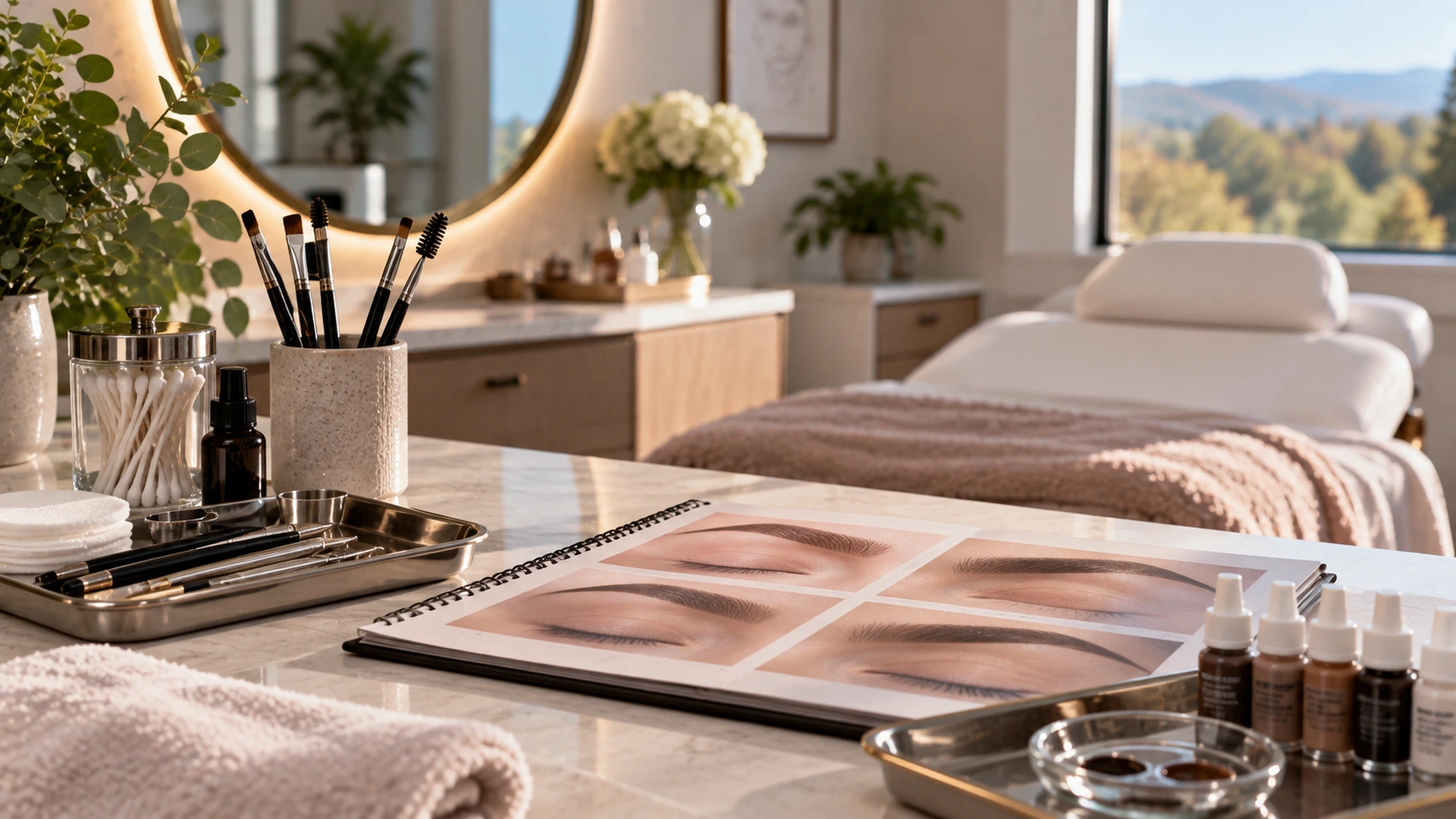
Ombre powder brows use a rotary machine to build a soft, gradient fill across the brow, working well on oily, combination, and mature skin. Microblading uses a hand tool to create individual hair-like strokes, performing best on dry to normal skin with good elasticity. The technique that’s right for you depends on your skin type, not which result looks best in someone else’s photo.
Key Takeaways
- Ombre powder brows suit a broader range of skin types, including oily, combination, and mature skin
- Microblading produces a hair-stroke texture but fades less cleanly on oily or mature skin over time
- Nano brows offer ultra-fine strokes and are best suited to thin, dry, or sensitive skin
- Combination brows layer both techniques for clients who want texture and lasting definition
- Skin type is the deciding factor, and a proper consultation is the only reliable way to evaluate it
You’ve probably been filling in your brows every single morning for years. Not because it’s something you enjoy, but because showing up without them doesn’t feel like an option. So you carve out the time no matter how early the alarm goes off or how quickly the morning disappears.
Micropigmentation exists because that routine has a real cost, and there’s a better way. The question isn’t whether you can skip the daily pencil. The question is which technique actually delivers on that promise for your specific skin.
What Makes the Method Matter More Than the Pigment?
Micropigmentation deposits cosmetic pigment into the upper layers of the skin to create a semi-permanent enhancement. The tool and technique used to deliver that pigment determine how deep it sits, what pattern it forms, and how your skin retains it as it heals.
That isn’t a technical footnote. It’s the reason the same pigment color can look like a polished, natural brow on one person and a soft, blurred stripe on another a year later. Different skin types behave differently with different tools. The skin’s response during healing is what determines the healed outcome, and choosing the wrong technique for your skin type doesn’t just affect day one. It affects how the result holds up across the life of the treatment.
At Million Dollar Brows, every client starts with a consultation where Elizabeth evaluates skin type, existing brow shape, facial structure, and lifestyle before a technique is chosen. She hand-maps each design to the client’s natural facial structure rather than using stencils, because no single technique is universally correct, and the wrong one is a problem that compounds over time rather than correcting itself.
What Are Ombre Powder Brows and Who Do They Actually Suit?
Ombre powder brows use a rotary machine to create a pixelated, gradient effect. The front of the brow stays soft and lighter in tone. The body and tail build toward a fuller, more defined finish. The result looks like a brow that’s been carefully filled with powder or pomade, not drawn on sharply.
This technique holds up on oily skin because it doesn’t depend on sharp, distinct lines. The shading pattern works with the skin’s natural oil production rather than against it. On dry to normal skin, microblading’s individual strokes stay crisp and defined. On oily skin, that same oil softens the pigment during healing, gradually blurring the stroke definition. Ombre powder brows sidestep that problem entirely, because the technique doesn’t rely on fine lines to read correctly.
Consider a typical situation: someone with combination-to-oily skin chooses microblading based on photos they’ve loved online, has a great result in the first few months, then watches it soften and blur by the time the second year arrives. That client, assessed for skin type during a proper consultation, would likely have been a better candidate for ombre powder brows from the start.
The technique wasn’t wrong for the look. It was wrong for the skin.
Mature skin with larger pores responds well to ombre powder brows for the same reason. The gradient holds its shape because it isn’t built from fine strokes that pore size can disrupt.
You can see the full range of available techniques through Million Dollar Brows’s services page.
How Does Microblading Compare and When Is It the Right Call?
Microblading is a hand-tool technique. A blade creates fine, shallow incisions in the skin, and pigment is deposited into those incisions in strokes that closely resemble individual brow hairs. Done well on the right skin, the result has genuine texture, not a filled-in appearance.
That specificity is both its strength and its constraint.
Dry to normal skin with good elasticity retains those strokes with real definition. The strokes stay where they’re placed as the skin heals, and the result holds for a predictable period before it fades evenly. For clients who genuinely have that skin type and want a hair-stroke appearance, microblading is the right call.
Oily skin changes the equation. The fine incisions heal differently when the skin produces more oil. The strokes soften as healing progresses, and the finished result moves toward a soft, filled look, which is exactly what ombre powder brows produce more reliably and more durably from the start.
If you want to understand the specific factors that separate a realistic microblading result from one that ends up reading as artificial, this breakdown of what actually determines whether microblading looks real is worth reading before you book.
The Honest Side-by-Side
The comparison that matters isn’t which technique photographs best in a portfolio. It’s which technique holds up for your skin over the full life of the treatment.
| What You’re Weighing | With Million Dollar Brows | Without a Proper Consultation or With an Unqualified Provider |
|---|---|---|
| Skin type match | Evaluated before any decision is made; technique selected accordingly | Often chosen based on photos or trend, not a real skin assessment |
| Result longevity | Technique chosen to work with how your skin heals and behaves | Mismatch leads to faster fading, blurring, or poor retention |
| Long-term cost | Fewer corrections, predictable result from the start | Rework and correction cost more than getting the right technique first |
| Design fit | Hand-mapped to your facial structure by a licensed artist with over 1,000 procedures completed | Stencil-based or trend-driven; may not suit your features |
| Confidence in the outcome | Grounded in a thorough consultation and over 10 years in the beauty industry | Variable and difficult to assess before you’re already committed |
Elizabeth has completed 1,500 hours of apprenticeship as required by the state of New Hampshire and has performed over 1,000 procedures across skin types. The consultation isn’t a box to check before you book. It’s where the real decision actually gets made.
For a broader picture of how micropigmentation compares to other options, this honest tradeoff guide covers the alternatives in plain terms.
What Most People Don’t Expect About the Healing Process
Here’s what often surprises people going into their first micropigmentation appointment: the result you leave with isn’t the final result.
Pigment sits higher in the skin right after the procedure, so the color appears darker and more intense than it will once healing is complete. As the skin heals over the following weeks, the surface flakes naturally and the color softens. The brows may look lighter than expected during this phase. That’s the healing process doing exactly what it should, not a sign something went wrong.
The fully healed result becomes visible several weeks after the procedure. Because this phase can catch people off guard, Elizabeth walks every client through what to expect at each stage of healing, so they’re not making decisions about their brows based on how they look mid-process. Trying to evaluate the outcome before healing is complete is one of the most common sources of unnecessary frustration in permanent makeup, and it’s entirely avoidable when you go in prepared.
Clients who receive a follow-up appointment after healing has fully resolved are in a position to refine the final result with accurate information about what the skin has actually retained. That’s a very different conversation than the one that happens when someone panics two weeks in and wonders whether something went wrong.
For clients still weighing whether any of this makes sense for their lifestyle, this practical guide to whether permanent makeup is right for you works through the decision without pressure.
Where Ombre Powder Brows Aren’t the Right Answer
Straight talk matters here.
If you already have a full, naturally dense brow with good symmetry and your main goal is a groomed, lifted appearance, a non-permanent treatment may be a better starting point. Micropigmentation adds pigment. If what you need is already there, working with your natural brow rather than adding over it is worth discussing.
If you have dry, normal skin with good elasticity and a hair-stroke texture is genuinely your priority, microblading or nano brows may serve you better than ombre powder brows. The goal is always the result that fits your skin and your features, not the technique that happens to be having a moment.
Certain health considerations also require a conversation before any procedure. Elizabeth covers relevant health history and preparation before any treatment is scheduled.
The frame that actually serves you is this: the right technique is the one that still looks right on you in two years, not the one that looked best in someone else’s before-and-after.
If you’re in New Hampshire, Maine, Massachusetts, Connecticut, New York, or Rhode Island, Million Dollar Brows is located at 87 Lafayette Road, Unit 9, Hampton Falls, NH. Booking is available online and by phone, Monday through Saturday, 9:00 AM to 4:00 PM. Take a look at the full list of available treatments at our services page and book when you’re ready.
Frequently Asked Questions
How long do ombre powder brows typically last?
Longevity depends on your skin type, sun exposure, and skincare routine, so individual results vary. Oily skin and active exfoliation tend to fade pigment more quickly. Drier skin combined with careful aftercare generally retains color longer. Elizabeth provides detailed aftercare guidance after every procedure, and following it plays a genuine role in how the result holds up over time.
Will ombre powder brows look too heavy for everyday wear?
The gradient design is specifically what prevents that. Because the front of the brow stays deliberately lighter and builds gradually toward the tail, the finished result reads as a naturally filled brow rather than a solid block of color. The effect is soft and powdery, not sharp or tattoo-like, when the technique is applied correctly to a design that fits your features.
Can ombre powder brows be applied over faded microblading?
In many cases, yes. Faded microblading can be worked with or over using an ombre powder approach, but the right path depends on how the original work healed and what the underlying pigment looks like at the time of the consultation. Elizabeth assesses this before any plan is made rather than committing to an approach without seeing the actual condition of the skin and existing pigment.
Does the procedure hurt?
A topical numbing cream is applied before the procedure begins. Most clients describe the sensation as mild pressure or a light scratching feeling rather than pain. Sensitivity varies by person, so individual experiences differ, but the numbing step meaningfully reduces discomfort for most people.
How do I know whether microblading or ombre powder brows is the better fit for me?
Skin type is the primary factor. Oily or combination skin and mature skin with larger pores typically respond better to ombre powder brows because the shading pattern doesn’t depend on fine, sharp strokes retaining their definition. Dry to normal skin with good elasticity is better suited to microblading or nano brows if a hair-stroke texture is the goal. An in-person consultation is the only reliable way to evaluate this, because skin behaves differently from person to person even within those general categories.
What’s the difference between ombre powder brows and a traditional eyebrow tattoo?
Traditional eyebrow tattoos use ink deposited deeper into the skin. Over time, that ink can shift in tone, sometimes toward blue, gray, or green tones as it ages. Micropigmentation uses specialized pigments placed at a shallower depth, designed to fade more naturally and stay truer to tone as they do. The healed result reads like soft, filled-in makeup rather than a tattoo, and the fading pattern is more predictable and more natural-looking.
How far in advance should I book before a significant event?
Build in enough time for the full healing process to complete before your event. The skin goes through visible healing in the weeks following the procedure, and the final healed result isn’t fully visible until several weeks out. Booking well in advance of any important occasion means you arrive with a settled, refined result rather than a brow that’s still mid-healing. Elizabeth can walk you through what to expect at each stage during your consultation so you can plan accordingly.
About the Author
Elizabeth is the founder of Million Dollar Brows and a licensed, certified permanent makeup artist in the state of New Hampshire. With over ten years in the beauty industry, 1,500 hours of required apprenticeship, and more than 1,000 procedures performed, she specializes in eyebrow microblading, microshading, ombre brows, eyeliner, and lip micropigmentation. Million Dollar Brows serves clients across New Hampshire, Maine, Massachusetts, Connecticut, New York, and Rhode Island from its Hampton Falls, NH location.