
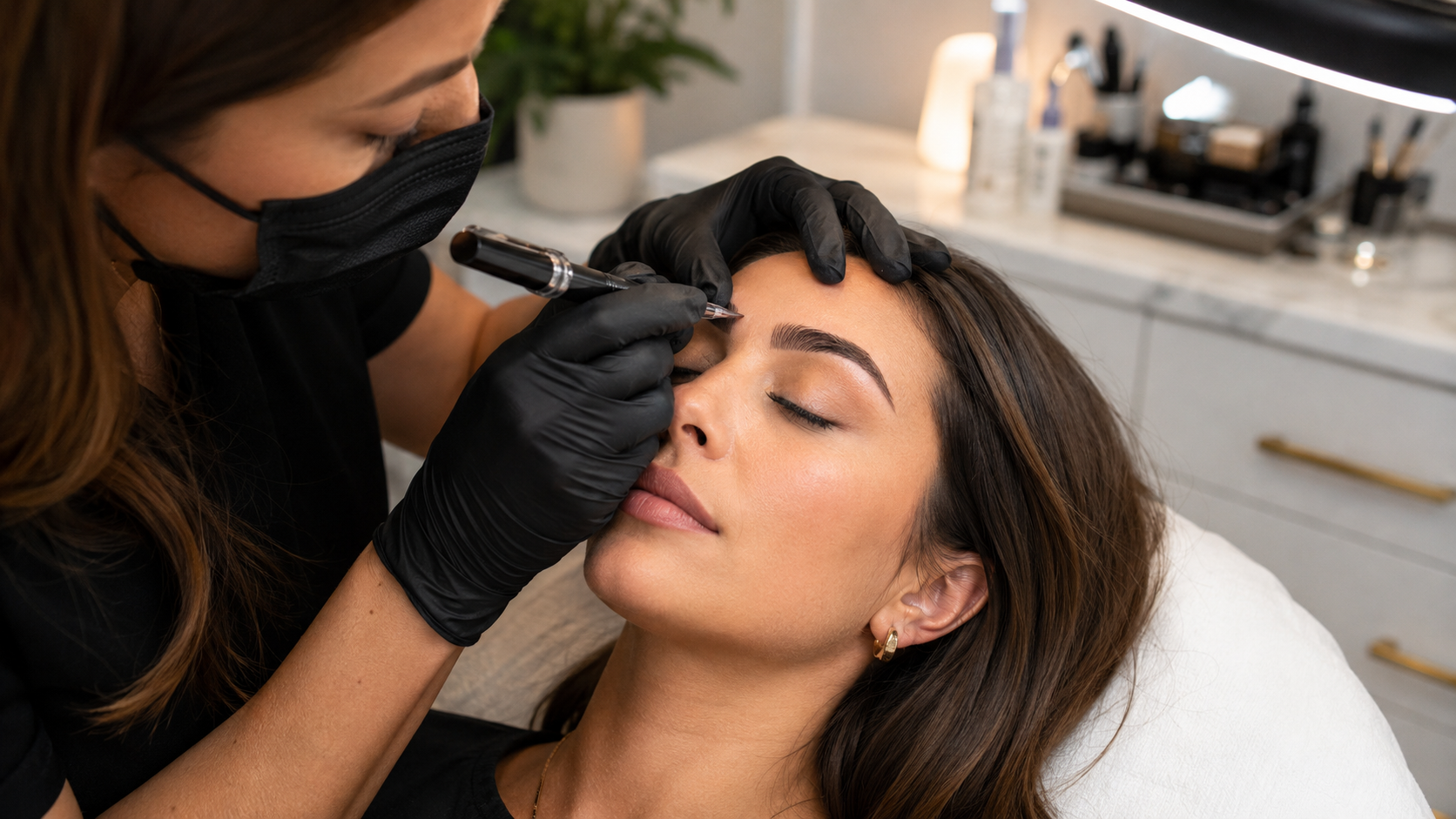
There’s a particular kind of frustration that builds when you’ve been thinking about semi-permanent makeup for months – maybe longer – but every time you get close to booking, something pulls you back. Not fear exactly. More like the nagging sense that you’re missing something, and the wrong timing could cost you.
The timing question is real. But most people are asking it wrong.
The right time to get semi-permanent makeup is when your skin is stable, your schedule allows for a proper healing window, and you’re not in the middle of a major lifestyle change – not when the calendar looks perfect or the price feels right. Timing decisions in permanent makeup hinge on three variables: skin condition, procedure type, and your personal recovery window. Get those aligned and you’re ready.
Key Takeaways
- Semi-permanent makeup timing depends on skin stability, not season or convenience windows
- Summer heat and sun exposure require specific pre- and post-care adjustments – not avoidance
- A touch-up appointment (typically 6-8 weeks after the initial session) is part of the procedure, not optional maintenance
- Oily skin, recent chemical peels, and active breakouts are real reasons to wait – not excuses
- The most expensive timing mistake isn’t acting too soon – it’s waiting so long that you spend years applying daily makeup you didn’t need to
Why Does Everyone Seem to Have a Different Answer About When to Book?
The confusion about timing in semi-permanent makeup comes from a specific mismatch: most of what you read online is written about the procedure, not about the skin receiving it. Aftercare guides describe what to do post-appointment. Clinic websites describe what the process looks like. Almost nobody explains the upstream decision – whether your skin and your life are actually in the right state to hold pigment well.
The procedure creates the result. Your skin decides how long it keeps it.
That’s not a caveat – it’s the whole mechanism. Pigment retention depends on how your skin behaves during healing: how much it exfoliates, how oily it runs, how reactive it is to the micro-trauma of the process. A technically perfect session on skin that’s mid-cycle from a retinol regimen or recovering from sun damage will heal differently than the same session on stable, well-hydrated skin.
This is why two women can have the same procedure with the same artist and walk out with noticeably different retention at six weeks. It’s not luck. It’s skin behavior.
What Are the Real Signals That You’re Ready – and the Ones That Mean Wait?
The Ready-Wait-Redirect framework is a three-category decision tool for timing permanent makeup appointments. Use it before booking, not after.
Ready signals:
- Skin is in its normal baseline state – no active breakouts, no recent peels, no new skincare products introduced in the last 30 days
- You can protect the treated area from direct sun exposure for at least two weeks post-appointment
- Your schedule has a genuine 7-10 day buffer where you’re not swimming, sweating heavily, or attending events where you’d feel self-conscious during the peeling phase
- You’ve been off blood thinners, retinoids, and exfoliating acids for the recommended period (your artist will give you exact timelines)
Wait signals:
- You’re mid-treatment with a dermatologist – active acne prescriptions, chemical peel series, or laser resurfacing within 60 days
- You’re pregnant or nursing (most licensed practitioners won’t perform the procedure in this window)
- You’ve just had a significant tan or sunburn – UV-damaged skin heals unpredictably and pigment migration risk increases
- You’re in the middle of a major weight fluctuation or hormonal shift that’s visibly changing your skin
Redirect signals – these aren’t reasons to wait indefinitely, they’re reasons to have a different conversation first:
- You’re not sure what shape or style you want
- You’re hoping the procedure will look exactly like a photo you saved from someone else’s face
- You haven’t had a consultation yet
The microblading services at Million Dollar Brows include a consultation process specifically designed to work through redirect signals before the appointment date is set.
Isn’t Summer the Worst Time for Permanent Makeup?
This is one of the most repeated pieces of advice in the permanent makeup world, and it’s only half right.
Summer isn’t the worst time. Unprotected summer is the worst time. There’s a meaningful difference.
The actual concern is UV exposure on healing skin. Fresh pigment and healing tissue are both more vulnerable to sun damage in the first two weeks post-procedure. But if you can manage sun protection during that window – which most busy professionals can, especially if they book around a long weekend or a lower-activity stretch – summer is no worse than any other season.
What summer does require is more deliberate aftercare planning. Sweating from intense workouts, chlorine from pools, and salt water from the beach all affect healing. None of these are dealbreakers. They’re just variables to account for.
Consider a common scenario: a woman books a brow appointment in late June, takes a week off from her morning runs, avoids the pool for 10 days, and wears a hat outdoors. Her healing is clean and her pigment retention is excellent. The season wasn’t the problem. The planning was the solution.
The Timing Mistake That Costs the Most
Waiting for the perfect moment is the most expensive timing decision in permanent makeup – and almost nobody frames it that way.
Here’s the mechanism: every month you delay is another month of daily makeup application, another morning routine that runs long, another day when you leave the house feeling like something’s missing. If you’re applying brow product five days a week, that’s roughly 250 applications a year. At five minutes each, that’s over 20 hours annually spent on something semi-permanent makeup eliminates entirely.
The cost of the procedure is fixed. The cost of waiting compounds.
This isn’t an argument to rush a decision you’re genuinely not ready for. It’s an argument against the specific pattern where someone is ready – skin is stable, schedule is workable, they know what they want – but keeps finding reasons to push the appointment another few months out.
That gap between “I should do this” and “I actually booked it” is where most of the real cost lives.
How Does Semi-Permanent Makeup Compare to the Alternatives?
| Decision | Time Investment | Maintenance | Realistic Lifespan | Risk of Regret |
| Semi-permanent makeup (professional) | 2-3 hours initial + 1 touch-up | Annual refresh, as needed | 1-3 years depending on skin type | Low when consultation is thorough |
| Daily makeup application | 5-15 min/day, every day | Ongoing – daily | Zero carry-over | Accumulates as time cost |
| DIY brow tinting/lamination | 30-60 min every few weeks | Frequent repetition | 2-6 weeks per session | Moderate – technique-dependent |
| Waiting / doing nothing | Zero now | Zero now | No benefit accrues | High – time cost compounds silently |
The comparison that matters isn’t semi-permanent makeup versus another beauty product. It’s semi-permanent makeup versus the ongoing daily cost of not having it.
For women managing erratic schedules across New England – early meetings, travel, long days with no time to refresh – the permanent makeup services at Million Dollar Brows exist specifically to close that gap.
Who Should Actually Wait Before Booking?
Straight talk: some people genuinely aren’t ready, and booking anyway doesn’t serve them.
If your skin is actively reactive – you’re in the middle of an acne treatment cycle, you’ve had laser work done recently, or your skin is going through a documented hormonal shift – waiting until that stabilizes will produce better results. A procedure done on reactive skin isn’t a failed procedure, but it’s a harder healing process and retention is less predictable.
If you’re not sure what you want, that’s not a reason to avoid booking – it’s a reason to start with a consultation rather than an appointment. The difference matters. A consultation is a conversation. An appointment is a commitment.
And if you’ve had a bad experience elsewhere, that’s worth discussing before you book anywhere new. What went wrong, and why, determines whether the issue was timing, technique, skin type, or aftercare. Not all poor outcomes have the same cause, and a good artist will want to understand your history before touching your face.
The reviews from clients at Million Dollar Brows reflect what happens when the consultation process actually works – when the right questions get asked before the appointment, not after.
FAQ
How far in advance should I book a semi-permanent makeup appointment?
Most reputable clinics book out several weeks, especially for initial appointments. Give yourself at least three to four weeks of lead time – this also gives you room to complete any pre-care requirements like stopping retinoids or exfoliating acids before the session.
What happens if I book and then realize my skin isn’t ready?
Contact the clinic as soon as you know. Rescheduling for a skin-readiness reason is far better than proceeding and getting unpredictable results. A good artist would rather move your appointment than do the procedure under conditions that compromise healing.
Do I really need a touch-up, or is it optional?
The touch-up – typically scheduled six to eight weeks after the initial session – is part of the procedure, not an upsell. The first session deposits pigment; the touch-up refines shape, fills any areas that healed lighter, and locks in the final result. Skipping it is like leaving a job half done.
Can I get semi-permanent makeup if I have sensitive skin or cosmetic allergies?
This is one of the strongest reasons to consider permanent makeup. Many women with allergies to conventional cosmetics find that semi-permanent options eliminate the daily exposure to irritating ingredients. Disclose your full allergy history at your consultation – a qualified artist will patch test and adjust the approach accordingly.
How do I know if my brow shape is right for my face before committing?
This is exactly what the pre-procedure mapping process is for. Before any pigment is applied, the artist draws the shape on your skin so you can see and approve it. Nothing is permanent until you’ve agreed to the shape. If it doesn’t look right, it gets adjusted.
Will semi-permanent makeup look natural or will it be obvious?
When done well, the goal is that people notice your brows look great – not that they notice you’ve had a procedure. Techniques like microblading use hairlike strokes that mimic natural brow hair. The result should enhance what’s already there, not replace it with something that reads as drawn-on.
What’s the actual difference between microblading and ombre powder brows – and how do I know which one fits me?
Microblading creates individual hairlike strokes and works well for most skin types seeking a natural, defined look. Ombre powder brows create a soft, filled-in gradient effect – closer to the look of brow powder – and often hold better on oilier skin types. Your artist will recommend based on your skin type and the look you’re after, not just personal preference.
Ready to Stop Thinking About It and Actually Book?
If you’ve read this far, you’re not someone who needs more convincing – you need a consultation that answers the specific questions your situation raises. Book a session with Million Dollar Brows in Hampton Falls, NH, and come in knowing what you want to ask. Elizabeth and the team work with clients across New England and will tell you honestly whether your skin is ready, what technique fits your face, and what realistic results look like for you.
You can explore the full range of services at the Hampton Falls clinic or call to book directly. Open Monday through Saturday.
About the Author
Elizabeth is the founder of Million Dollar Brows and a licensed permanent makeup specialist in the state of New Hampshire. With over 1,000 procedures performed and more than a decade in the beauty industry, she specializes in microblading, microshading, ombre brows, eyeliner, and lip procedures. Million Dollar Brows serves clients across a six-state New England region from its Hampton Falls, NH clinic.