
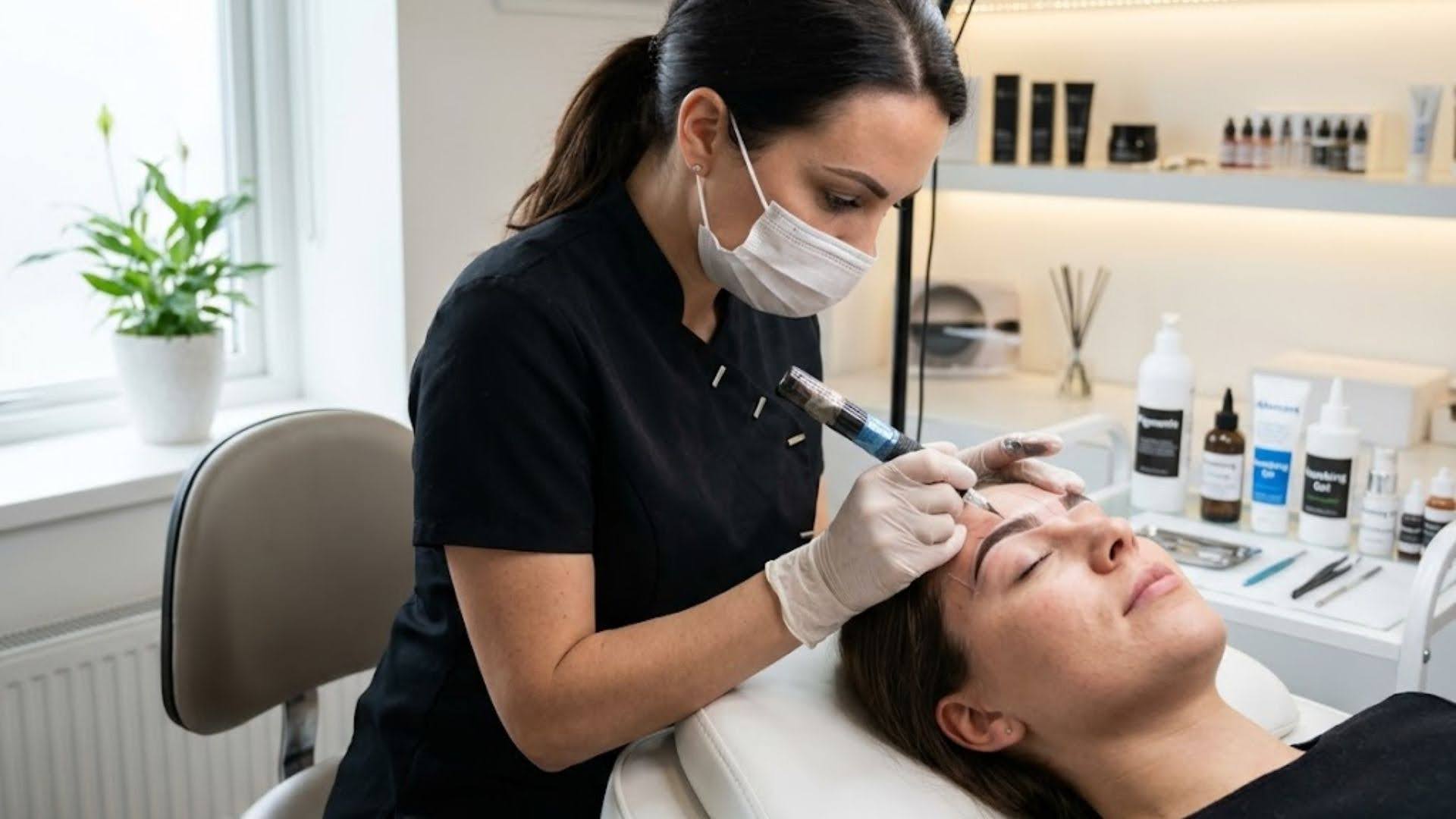
Choosing the right microblading service provider is essential to achieve the brows you want while staying safe. The growing popularity of microblading makes choices confusing. This guide breaks down the key factors—credentials, experience, client feedback, and safety standards—so you can decide with confidence. We’ll cover why certification matters, what to cover in consultations, and how aftercare supports lasting results.
Credentials and Certifications
Verify an artist’s credentials before booking. Certified microblading artists complete focused training and follow industry protocols. That training delivers safer technique, consistent results, and higher client satisfaction.
Recent research underscores the rising demand for certified practitioners and the need for standardized training programs to protect consumers.
Microblading Artist Certification & Training
Semi-permanent makeup is a delicate and invasive practice, and its professionalisation has increased demand for certification and retraining. Systematic training and assessment are essential. Developing a standardized training program helps ensure qualified practitioners and consumer safety, particularly as formal regulations for tattooing and semi-permanent makeup are expected within the next two years.
Delphi Analysis of a Group of Experts to Develop a Semi-Permanent Makeup NCS Training Program-In the Run-up to the Tattoo Law Regulations, 2025
How to Verify a Microblading Artist’s Certification and Training
Take these steps to verify an artist’s certification:
- Check for Certifications: Look for certifications from reputable organizations that specialize in microblading training.
- Inquire About Training Programs: Ask the artist about their training background and the specific programs they completed.
- Request Documentation: Don’t hesitate to ask for proof of certification and any additional training they may have undertaken.
Which Certification Bodies and Standards Ensure Quality and Safety?
Several certification bodies play a crucial role in ensuring the quality and safety of microblading services. These include:
- The Society of Permanent Cosmetic Professionals (SPCP): This organization sets high standards for training and safety in the industry.
- The American Academy of Micropigmentation (AAM): AAM provides guidelines and resources for artists to maintain best practices.
- State Health Departments: Many states have specific regulations and licensing requirements for microblading artists.
Knowing these standards helps you choose with confidence. For more information on certified artists and services, visit Million Dollar Brows.
Experience
Experience directly affects outcomes. An artist with extensive practice refines stroke technique, symmetry, and shading. They also recognise and manage common complications more effectively.
Client Reviews
Client reviews reveal real results and service quality. Look for comments on technique, professionalism, and long-term satisfaction. Read authentic client reviews to inform your choice.
Hygiene and Safety Standards
Hygiene and safety are non-negotiable. A reputable clinic uses sterile instruments, keeps treatment areas clean, and follows verified safety protocols throughout the procedure.
Recent studies highlight why understanding safety standards and potential complications matters for both practitioners and clients.
Microblading Safety & Complication Awareness
Eyebrows are central to facial aesthetics, and restoration is performed by carefully depositing pigment into the epidermis. Microblading has grown in popularity through social media. This study aimed to assess awareness of eyebrow microblading, possible complications, and laser removal among the general population in Saudi Arabia.
A comprehensive evaluation of safety and awareness in eyebrow microblading: a cross-sectional study, Y Argobi, 2024
Consultation
A thorough consultation is essential. Use it to confirm desired shape and color, raise concerns, and review the treatment plan. A competent artist listens, explains each step, and ensures you’re comfortable with the approach.
Color Matching Expertise
Color matching determines how natural the results will appear. An experienced artist applies color theory and pigment knowledge to select shades that complement your skin tone and undertones.
Portfolio Showcase
Review an artist’s portfolio to assess skill and style. Look for clear before-and-after photos that show consistent results. A varied portfolio demonstrates versatility and an ability to meet different client needs.
Understanding the Healing Process
Understanding the healing process is key to optimal results. Expect scabbing, temporary pigment shifts, and gradual settling. Follow aftercare to protect the work and support long-term retention.
Price Transparency
Transparent pricing helps you compare value. Confirm what the fee covers and any extra costs for touch-ups or aftercare products. A reputable artist provides a clear fee breakdown.
For details on products and aftercare, explore the products offered by leading providers.
Maintenance and Touch-Ups
Microblading requires maintenance. Most clients need a touch-up 6–8 weeks after the initial session to perfect the result. Know the maintenance schedule and expected costs for long-term satisfaction.
What Are the Essential Microblading Certification Requirements?
Artists must meet core certification requirements to practice safely. These typically include completion of a recognized training program, passing a certification exam, and adhering to state health regulations.
- Completion of a recognized training program
- Passing a certification exam
- Adhering to state regulations and health standards
How to Verify a Microblading Artist’s Certification and Training
Verify an artist’s certification by requesting documentation from recognized training programs and asking about their continuing education.
Which Certification Bodies and Standards Ensure Quality and Safety?
Key certification bodies include SPCP and AAM; both set industry standards for training and safety.
What Safety and Hygiene Standards Should You Expect from Top Microblading Clinics?
Top clinics adhere to strict safety and hygiene standards, including single-use sterile tools, regular sanitisation of workspaces, and compliance with local health regulations.
- Use of sterile, single-use equipment
- Regular cleaning and sanitization of workspaces
- Compliance with local health regulations
What Are the Industry-Recommended Permanent Makeup Safety Tips?
Keep these safety tips in mind when considering microblading:
- Always choose a certified artist with a strong portfolio.
- Ensure the clinic follows strict hygiene practices.
- Discuss any allergies or skin sensitivities with your artist.
How Do Certified Artists Maintain Sterile and Safe Procedures?
Certified artists keep procedures sterile by using disposable tools, following strict sanitation protocols, and educating clients on aftercare and safety measures.
- Using disposable tools and equipment
- Following strict sanitation protocols
- Educating clients on aftercare and safety measures
Which Microblading Styles and Techniques Best Suit Your Needs?
Styles and techniques vary to suit facial features and personal preferences. Understanding the options helps you choose a technique that meets your aesthetic goals.
Advances in eyebrow enhancement—from traditional methods to modern procedures—make it important to select a provider skilled in current techniques for safe, personalised results.
Advanced Microblading Techniques & Safety
Eyebrows play a major role in facial expression, perceived age, and personal identity. Over recent decades the field has evolved from basic grooming to advanced, evidence-informed procedures. Modern practice combines modelling techniques, refined pigmentation methods, and technological tools to deliver safe, natural, and personalised outcomes. This review outlines current methods, recent advances, ongoing research, and future directions, emphasising the central role of safety, skill, and technology in eyebrow aesthetics.
EYEBROW MODELING AND COLOR TRANSFORMATION: MODERN APPROACHES AND FUTURE PERSPECTIVES, 2025
How to Compare Microblading Styles: Natural, Ombre, and Hybrid Techniques
- Natural Style: Mimics the look of natural hair strokes for a subtle effect.
- Ombre Style: Creates a gradient effect, darker at the tail and lighter at the front.
- Hybrid Technique: Combines both natural and ombre styles for a fuller look.
What Role Does Artist Expertise Play in Technique Selection?
An artist’s expertise determines the best technique. They assess your facial structure and preferences, then recommend the style that will deliver the most natural, balanced result.
What Are the Key Microblading Aftercare Advice and Maintenance Tips?
Follow these aftercare steps to preserve results:
- Avoid Water: Keep your brows dry for the first week.
- No Makeup: Avoid applying makeup on the brows during the healing process.
- Moisturize: Use recommended aftercare products to promote healing.
How to Use Aftercare Products for Optimal Healing and Longevity
Apply aftercare products correctly. Use a thin layer of the recommended ointment to keep the area lightly moisturized without over-saturating.
What Are Common Aftercare Mistakes to Avoid?
- Picking at Scabs: This can lead to uneven results.
- Exposing Brows to Sunlight: Protect your brows from UV exposure during healing.
- Skipping Aftercare: Consistent aftercare is vital for optimal results.
How to Evaluate Cost and Value When Choosing a Microblading Service Provider?
Evaluate cost by considering the artist’s experience, the quality of products used, and the overall level of service provided.
What Is the Typical Price Range for Certified Microblading Services?
Certified microblading prices vary by location and artist experience, typically ranging from $400 to $1,000 for the initial procedure.
How to Balance Cost with Quality and Artist Credentials
Prioritize credentials and verified results over the lowest price. Investing in a skilled, reputable artist often delivers better, longer-lasting outcomes.
Why Are Client Testimonials and Reviews Crucial in Selecting the Best Microblading Clinic?
Testimonials and reviews reveal real client experiences and help you assess service quality and an artist’s skill. Seek detailed accounts that cover the full experience.
How to Identify Authentic Client Testimonials and Success Stories
Identify authentic testimonials by looking for:
- Detailed descriptions of the experience
- Before-and-after photos
- Consistent positive feedback across multiple platforms
What Do Top-Rated Clients Say About Their Microblading Experience?
Top-rated clients often highlight the artist’s professionalism, the quality of the results, and how well the artist listened to their preferences. For questions or to schedule a consultation, feel free to contact us.
Frequently Asked Questions
What Should I Expect During the Microblading Procedure?
Expect a full consultation to confirm shape and color. The artist applies a topical anesthetic to reduce discomfort. Using a specialised tool, they create hair-like strokes with semi-permanent pigment. Sessions usually take 2 to 3 hours, including consultation. After the procedure you’ll receive clear aftercare instructions to support healing.
How Long Does Microblading Last?
Results typically last 1 to 3 years, depending on skin type, lifestyle, and aftercare. Oily skin may fade faster; dry skin often retains pigment longer. Follow aftercare guidance and schedule maintenance. Touch-ups are usually recommended every 6 to 12 months.
Are There Any Risks or Side Effects Associated with Microblading?
Microblading is generally safe when performed by a certified artist, but risks exist. These include allergic reactions to pigments, infections if hygiene is poor, and possible dissatisfaction with results. Disclose allergies and skin sensitivities to your artist and follow aftercare to reduce risks.
Can I Get Microblading If I Have Sensitive Skin?
Yes—sensitive skin can still be treated, but consult first. Your artist may recommend a patch test to check for reactions to pigments or numbing agents. Tell the artist about sensitivities so they can adjust technique and product choices for a safer, more comfortable result.
What Should I Do If I’m Not Satisfied with My Microblading Results?
If you’re not satisfied, communicate your concerns with your artist. They may offer adjustments or touch-ups. For significant issues, discuss removal options such as laser or saline. Address problems promptly to reach the desired outcome.
How Can I Prepare for My Microblading Appointment?
Prepare by avoiding blood thinners like alcohol and caffeine for at least 24 hours before your appointment. Keep skin well-hydrated and free of irritation. Arrive with clean, makeup-free brows and be ready to discuss your preferred shape and color.
Conclusion
Selecting the right microblading provider delivers safe, long-lasting results. Prioritise certified artists, strict hygiene standards, and verified client feedback to make an informed decision. Explore our certified microblading services to achieve the brows you want. For more information or to schedule a consultation, reach out to us today.